
The Avant-scène Opera Is Reborn
After a brief period of turmoil, the prominent magazine *L’Avant-scène opéra* has risen from the ashes, driven by enthusiasts who continue to uphold its high standards of excellence. This article also highlights two books about or related to opera.




February 2025: a bombshell hit the French-language music media scene when it was announced that several periodicals were ceasing publication, including the iconic Opera Proscenium. Readers, artists, and opera directors alike rallied in force, and thanks in particular to the commitment of the founder of the Olyrix group, Damien Dutilleul, publication of this bimonthly magazine—widely recognized for the quality and insight of its opera reviews—was able to resume in November of that same year. This welcome revival is now accompanied by a digital platform offering subscription-based access to all issues published to date (the scanning of back issues is currently underway), enriched with audio and video clips, photos, and additional information.
Whether in print or digital format, each volume in the collection features an opera—whether it is part of the standard repertoire or a (re)discovery—following a format that has ensured the magazine’s enduring success among both enthusiasts and professionals: the complete libretto, with a French translation where applicable, supplemented by a listening guide that analyzes each scene in detail—both musically and in terms of the plot—along with articles written by renowned musicologists, historians, and other specialists examining the literary, historical, sociological, or psychological context of the work or the composer, and a comprehensive discography and videography—all presented in an attractive layout and accompanied by abundant color illustrations.
David and Jonathan by Charpentier
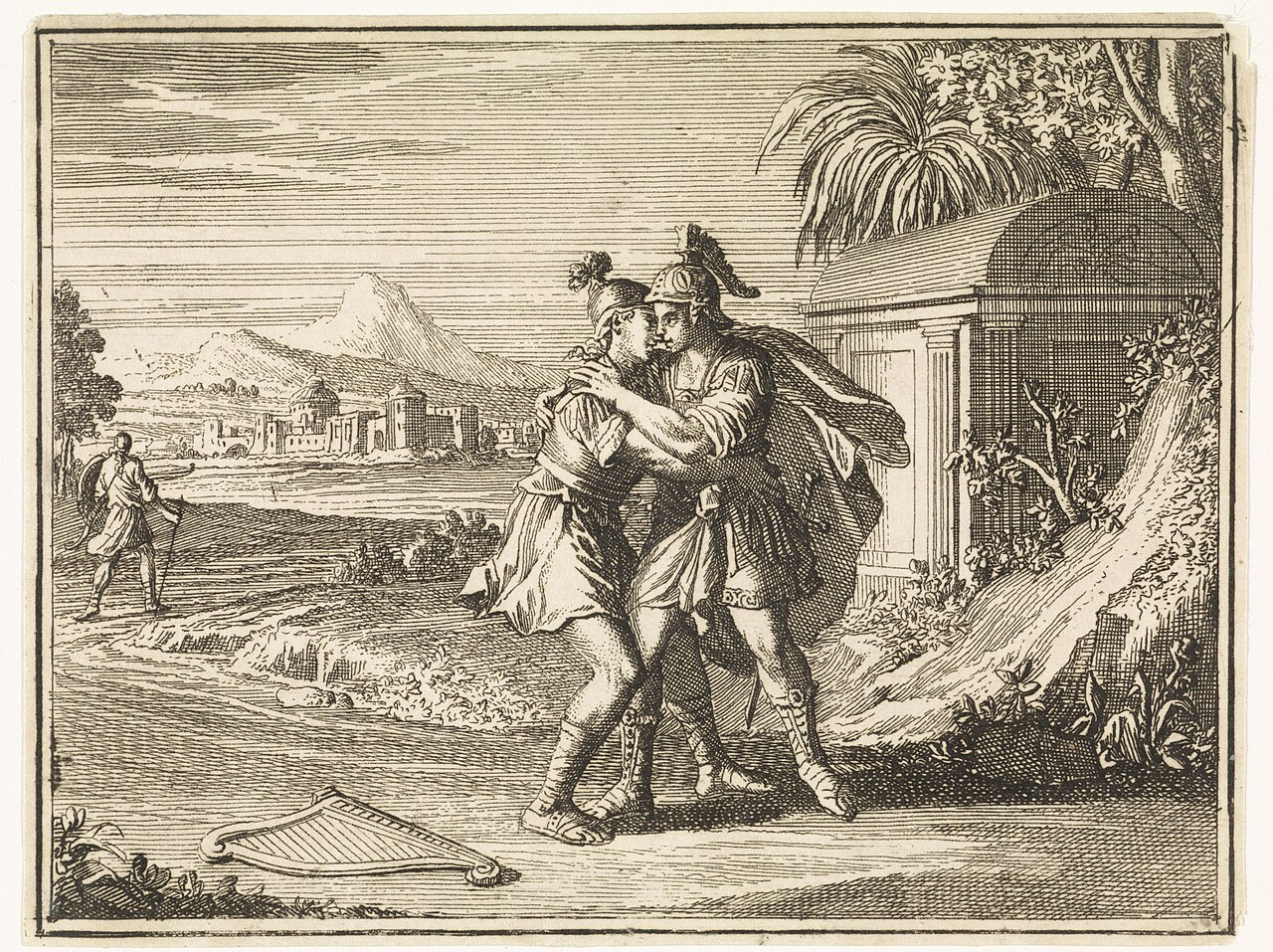
Among the recent publications from L’Avant-scène opéra, we should note the monograph devoted to David and Jonathan, a masterpiece by Marc-Antoine Charpentier based on a libretto by Father Bretonneau, which premiered to great acclaim in 1688 at the Jesuit college in Paris—which had recently been placed under the king’s patronage and renamed Louis-le-Grand. Twice a year, this renowned institution—where the kingdom’s future elite was educated—organized performances in which the students took part, as artistic practice was an integral part of their studies. A new custom had taken hold there of interweaving two tragedies on the same edifying subject, one recited in Latin and the other sung in French, with the acts alternating between them.
The prologue to Charpentier’s opera was not the customary tribute to Louis XIV, but already delved directly into history. While the narrative action unfolded through spoken acts, the musical interludes contained very few recitatives or stage effects, focusing instead on the intimate psychological portrayal of the protagonists, which the composer rendered with admirable detail. Accustomed to Lully’s musical tragedies, the audience—composed mainly of families from the high nobility and their courtiers—may have been surprised by the contrapuntal writing, the sophisticated harmony, and the originality of the phrasing and structure. What, moreover, did they think of David’s passionate outbursts and «the sweetest object of his desires,» Jonathas? A double standard in justice—sparing the powerful and reserving its harshest measures for the weakest—allowed for a certain freedom, whether at the royal court or more discreetly in the upper echelons of society, for what was called the «beautiful vice.».
Kept fully informed of the matter by her husband Philippe d’Orléans, the king’s brother, Elisabeth Charlotte of Bavaria (whose son, the future regent of France, studied composition under Charpentier) remarked bluntly: «[…] if one had wished to punish this vice, one would have had to start with the Jesuit college.» The eagerness to modestly veil these tender romantic impulses—yesterday as today—under the guise of a close friendship is certainly puzzling… This 347th volume of *L’Avant-scène opéra* also features an analysis of another score by Charpentier on the same theme, his sacred story The Bites of Saul and Jonathan, composed in 1682, one of his finest oratorios, in the tradition of those by his teacher Carissimi.
Philhellenism in Music
Première Loges Publishing, which had published the’Opera Proscenium Through early 2025, they had also published several books. Among the most recent is a personal yet engaging essay by musicologist Hélène Pierrakos, dedicated to the Greek inspirations of a few composers chosen as examples. Eagerly discovering ancient texts and delighting in the Poetics Drawing on Aristotle, humanist scholars of the late Renaissance sought to rediscover the essence of ancient tragedy and music: thus opera was born. The author describes with great subtlety the contradictions explored by Monteverdi in the’Orfeo and especially in The Return of Ulysses to His Homeland (in which she emphasizes the importance of the allegorical figure of human fragility, which will overcome adversity) and the expressive depth of Cremonese art (as expressed, among other things, in his Arianna's Lament). In Germany, philhellenism was largely developed by Johann Joachim Winckelmann; his aesthetic—characterized by a rejection of the excesses of the Rococo and a quest for the noble simplicity of antiquity—can be seen in Gluck’s desire to reform opera, to infuse it with a more dramatically effective structure, and to adopt more natural turns of phrase.
Still within the Germanic world, the idealist philosophers’ vision of Greece as a golden age— a radiant springtime of nascent civilization, would imbue the entire Romantic movement with its nostalgia for a lost world, particularly in poetry and, de facto, in the Lied, from Schubert to Hugo Wolf and Richard Strauss. Among the latter’s works, operas such as’Elektra, Ariadne on Naxos and Daphne show different facets of Greekness: tragic violence, a penchant for mythological metamorphoses, and the irruption of Dionysus—echoing Nietzsche’s thought, who viewed the mythology and tragedy of classical Greece as a stimulating interplay between the Apollonian and the Dionysian. Although set outside the geographical realm of Hellas, another example of this interplay can be found in Britten’s final opera, Death in Venice, a conflict between the pure aesthetic contemplation of physical beauty and the passionate love that turns self-destructive—the tipping point occurring during the strange final scene of the first act, which blends a pentathlon, Apollo’s supernatural voice, and Aschenbach’s gradual exaltation. This dreamt-of or fantasized Greece is also evident in the sparkling or iridescent light, the description of the sea, and the scents of pine, thyme, and fig trees; in the languid pose of the Debussyan faun; and in the spectacular sunrise of the Daphnis and Chloé by Ravel.
Responses to Prejudices Against Opera
The repetition and trivialization of inappropriate thoughts and misconceptions turn them into clichés that will seem like truths to anyone who fails to check the actual facts. A few years ago, Les Editions de l’Atelier launched a paperback series in which each volume challenges the blunders, misunderstandings, and misinterpretations that shape how a particular subject is viewed. Take opera, for example: Jean-Philippe Thiellay, an expert in the genre (he served, among other roles, as Deputy General Director of the Paris Opera), debunks the clichés that do it a disservice. These lazy opinions aren’t limited to notorious opera-haters; they can indeed creep into the conversations of the most innocent people as well as those of the most knowledgeable.
In response to 47 erroneous claims—accompanied by their controversial assertions and baseless allegations—there are nuanced counterarguments that, without seeking to downplay the truth contained in these criticisms or to gloss over very real problems, refute the prejudices: not all ticket categories are expensive; most operas do not last longer than a typical movie; and the repertoire continues to diversify, in part with Baroque works and new compositions. These vibrant performances are still capable of surprising audiences and are by no means reserved for an elite that consequently excludes certain segments of the population. While the economic situation of the opera sector is far from rosy in many countries, it is faring relatively better elsewhere. New opera houses are being built, particularly in Asia, proof that this art form is not exclusively intended for a European audience (in fact, many singers now come from other continents).
Although further efforts are needed, young people are certainly present (for example, 19% of the audience members at opera houses in France are under 30). Among the drawbacks is the issue of Baroque music, which the author could have defended more persuasively. Emphasizing with as much clarity as enthusiasm the enchanting and emotional experience that opera performances can provide, Jean-Philippe Thiellay knows how to find the right words and apt comparisons, thus offering readers valuable arguments capable of convincing the undecided and the reluctant. Furthermore, additional details, in the form of sidebars and footnotes, make this book accessible to everyone… just as opera itself can be.
You can order back issues and current issues in print through the website www.asopera.fr or subscribe on the page https://asopera.fr/subscription
https://boutique.asopera.fr/products/david-jonathas
https://www.fr.fnac.ch/a20531750/Helene-Pierrakos-Failles-dans-le-marbre – See the «Features» tab. Since the publisher no longer exists, there is no link to an official website.