
Change in the Central Committee
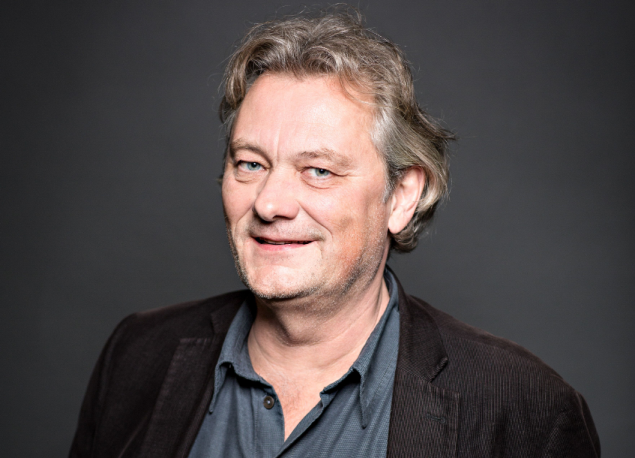
In the next issue, we will feature an article on Cristian Vasile, who, after 22 years on the Central Committee, has handed over his position to Maël Graa, whom we introduce here.




Maël Graa, a professional tenor living at the foot of the Vaud Jura, holds a Master’s degree in Literature from the University of Lausanne (2021) and a Master’s degree in opera singing from the Lausanne Conservatory of Music (2025). He performs as a chorister and soloist with several leading ensembles in French-speaking Switzerland, notably the Ensemble Vocal de Lausanne, the Académie vocale de Suisse romande, and the choirs of the Lausanne Opera and the Grand Théâtre de Genève. In addition to his artistic work, he serves as coordinator of the HEM Geneva alumni network and is committed to advancing the profession. As co-founder and secretary of the Association romande des choristes et solistes (ARCS), he contributes to discussions and initiatives aimed at improving working conditions for professional singers in French-speaking Switzerland.
Maël, what motivates you to serve on the Central Committee?
I would like to use my experience in the arts and nonprofit sectors to support my colleagues. It is very important to me to amplify their voices—especially those in the most precarious situations—by participating in a constructive dialogue among the various stakeholders in the music industry.
Compared to instrumentalists, what specific challenges do independent singers face?
Overall, while singers hold the same degree and do (more or less) the same job as instrumentalists, their status is often less highly regarded, and their working conditions are less favorable—especially given that «tenure-track» positions are extremely rare. In my view, this can be partly explained by Switzerland’s tradition of high-quality amateur choral singing. We’re very often asked what our “real” job is (I know some instrumentalists hear this too), or if we play an instrument. Furthermore, certain realities specific to professional vocal performance—such as health, recovery time, and the relationship to the stage—deserve to be highlighted, just as much as the challenges shared by all musicians.
What more can USDAM do to support the self-employed?
The USDAM already plays a vital role in advocacy and public education. It can continue to expand its support services regarding employment status, compensation, and social security, and carry on its outreach efforts with cultural partners to raise awareness of the realities of freelance work, which affect a large proportion of professional musicians in Switzerland.