
French Melancholies
The Capella Leonis Ensemble presents instrumental pieces and poems set to music by Grigny, Couperin, du Mont, and de Boesset.


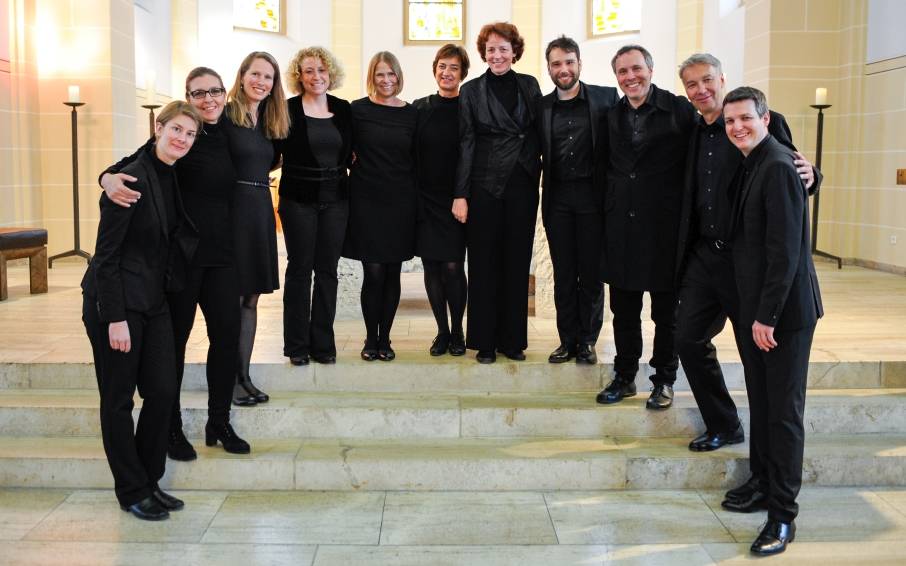
An album that seeks to recreate a sonic bubble: that melancholy that creeps into the pages of 17th-century French music. This is a far cry from the philosophical manifesto and the passion that Elizabethan England had for dark moods just a few decades earlier, but the Ensemble Capella Leonis seems here to want to highlight a certain sonic atmosphere.
In the introductory notes, Gabriel Garrido also explains the key element used by conductors Cédric Costantino and Philippe Foulon to achieve this result: a gentle approach to color, both in the instrumentation and in the voices. «Unusual choices that lift the veil on musical practices in private homes as well as on the taste for fusion among scholars of the time ,» adds the Argentine conductor, and these colors guide us on a journey of exquisite melancholy, woven together through the musical language of the instrumental pieces and poems set to music by de Grigny, Couperin, du Mont, and de Boesset.
Two small examples of success amid this gentle, melancholic harmony: Gilles Thomé’s chalumeau solos and soprano Marie Najma’s performance in the finale. A quick note for musicology enthusiasts: the album includes a acknowledgment to organist Jean-Luc Perrot, for his remarkable work in harmonically reconstructing de Grigny’s Overture, which survived only in the first violin manuscript of Lully’s orchestra at the Arsenal—a manuscript that also includes a second soprano part for Couperin’s *Carillons*. What is remarkable is the collaborative effort of the four and the resulting outcome: Jean-Luc Perrot provided his harmonization; Huguette Grémy-Chauliac further developed the harmonic interpretation in the style; Costantino arranged it for five parts, thereby achieving sonic balance, and then asked Thomas Leininger to review the melodic line using his expertise in period orchestration and to refine the arrangement. The result is a rendition that offers a delightful glimpse into what the work was like, and this is the first time we’ve heard it on a recording. The rest of the album features a selection of pieces that are extremely rare or previously unrecorded, which we discover in this special light—rich in color and texture—thanks to the conducting of Cédric Costantino, who makes a remarkable debut here.
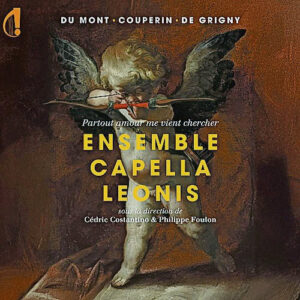
Capella Leonis: Love Comes to Find Me Everywhere. Indesens Records. IC094