
Music production, an increasingly popular discipline
Music production, computer music, electronic music: a growing number of young people are taking courses in fields that go beyond traditional instruments. Music teachers from different parts of Switzerland share their experiences.




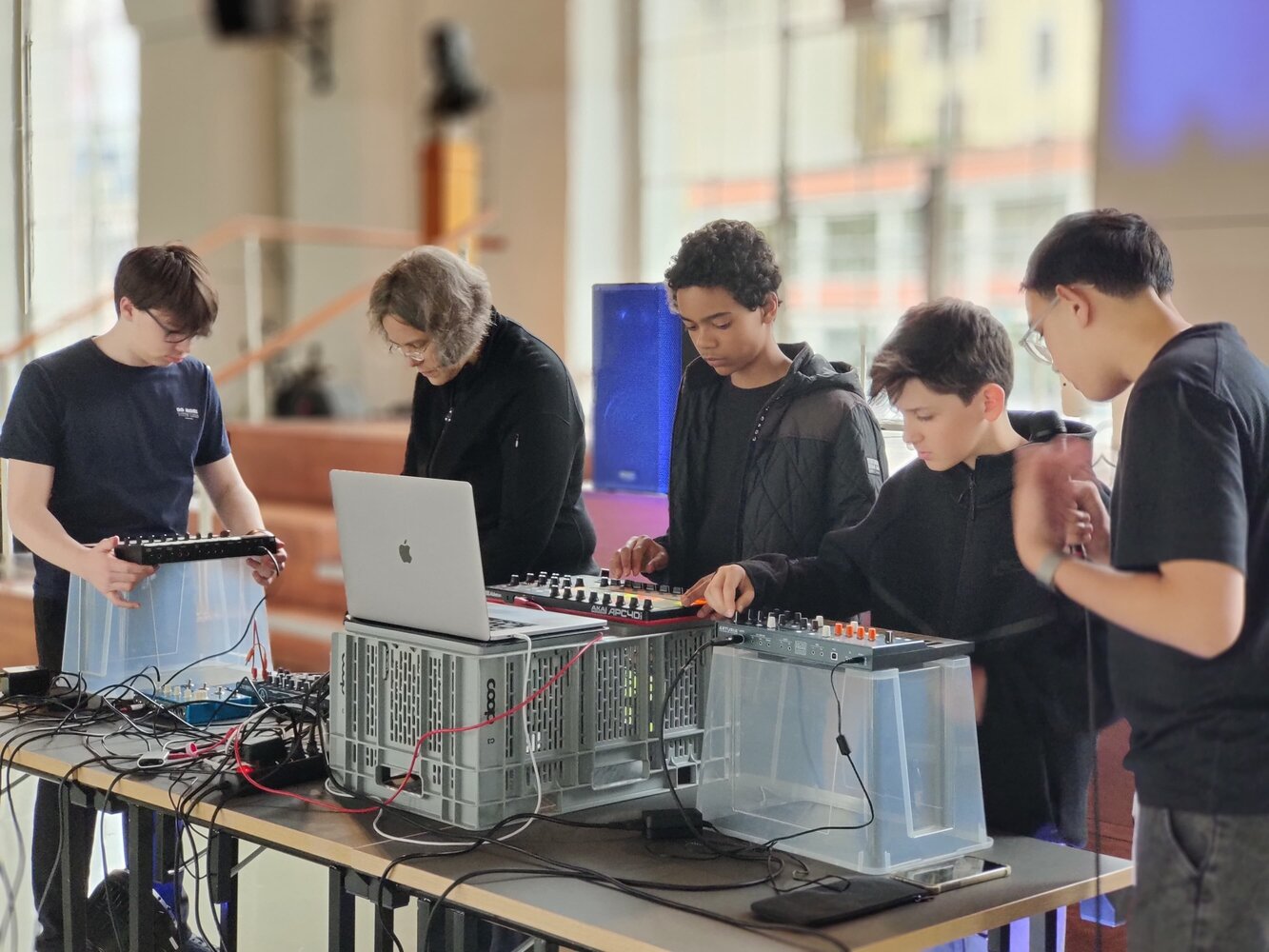
"Today, music production has become practically impossible without a computer," says Mauro Fiero, music teacher at Centro Studi Musicali (CSM) in Lugano. A reality that is increasingly reflected in the offerings of ASEM music schools. A number of them offer regular one-day introductory courses in Ableton and other digital audio workstations (DAWs), while others offer group or individual courses.
Introduction to synthesis
At theInstitut Jaques-Dalcroze de Genève Margaret Harmer, for example, has been teaching "contemporary electronic music" for ten years in a weekly group course for teenagers. "Electronic music has already been around for fifty years," notes the electronic artist and percussionist. "That's why it's so important to teach it. She carries out sampling projects with her young students, traces the history of hip hop and techno (among others), and introduces them to synthesis. Work is carried out using GarageBand, Logic, Ableton or Maschine software, depending on the students' prior knowledge or wishes. At the end of the year, young people aged 12 to 17 produce their own projects, sometimes entire albums. Margaret Harmer stresses a particularly important point for her: "I want young people to develop a very personal musical taste."
The students' musical universe
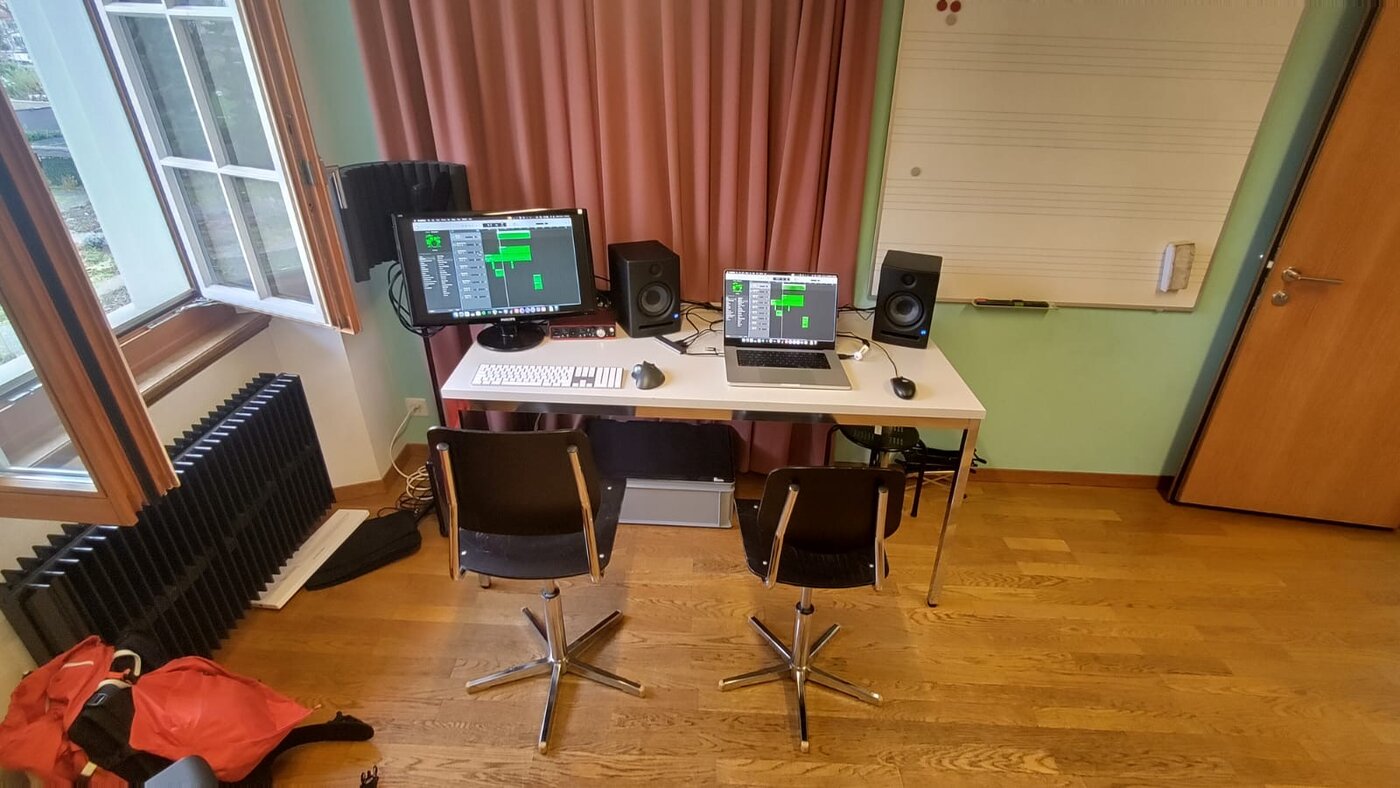
"It's a huge field, and the computer is an instrument in its own right," says Marc Scheidegger, head of department at theSursee Regional Music School. He, too, has been teaching music production to students of secondary I age and above for some time, in addition to electric guitar. It was his interest in the mixing desk in his classroom (how can I record this? what effects can I achieve?) that prompted the offer from the music school. He presented the idea of teaching music production as a separate subject to the management, developed a description of the discipline with a colleague, and then prepared boxes of teaching materials. Each contains a laptop, tablet, Zoom recorder and microphones. They can also be easily used by other music teachers, and even for lessons in school classes or during the vacations. "Students are very interested in the production," he points out. "It's their musical universe. For me, it was obvious that we had to offer this." It uses practical examples to deal with questions of harmony and rhythm. A specialization in live mixing is also planned.
Courses with waiting list
Do students practice at home? Marvin Trummer, keyboardist, producer and teacher at theZurich Conservatory School of Music (MKZ)He sees no difference with other instruments: some work a lot at home, others don't. For the past five semesters, he has been giving a two-level group course, free for students taking individual instrumental lessons at the MKZ. The offer is a great success, with a waiting list. "I see teaching as an opening", he explains, "I would have been very happy if it had existed in my time - as far as I'm concerned, there was only Chopin...". During his lessons, for example, he reconstructs the drumbeat of a song from recording to processing to train the ear, or sometimes brings along an analog synthesizer or tape recorder, much to the delight of the students.
Music production in the pre-school curriculum
At theBasel City Music Schoolproduction" has been offered under various names since the 90s. Tomek Kolczynski gives individual lessons to teenagers. Around three quarters of them work with Ableton, the others with Logic or Fruity Loops. Students also have the option of taking the pre-professional course to prepare for studies in "Audiodesign" at the University of Music and Performing Arts. As part of this preparatory course, Tomek Kolczynsi teaches the basics of synthesis, sampling and live electronics. He is also keen to introduce students to artists who have left their mark on the history of pop and electronic dance music.
Acquire skills
Artificial intelligence doesn't worry him at all: "It's not yet really usable musically," he says. "And when it is, I'll be happy to have a new tool at my disposal." Marvin Trummer also sees AI as an interesting tool, but fears it could become a "creativity killer". That's why it's not on his teaching agenda.
Mauro Fiero emphasizes that competent use of the tools available optimizes the music production process: "This allows us to concentrate on the artistic and creative aspect of the music."
______________________
Infobox: music production in music schools
- Courses, individual or group instruction
- Equipment: laptop, Midi keyboard, DAW
- Prerequisites: sometimes in conjunction with music theory, or instrumental training (e.g. piano, guitar, percussion), but not compulsory
- Age: generally from 12 years upwards