
Shortage of Skilled Workers: Finding Solutions Together
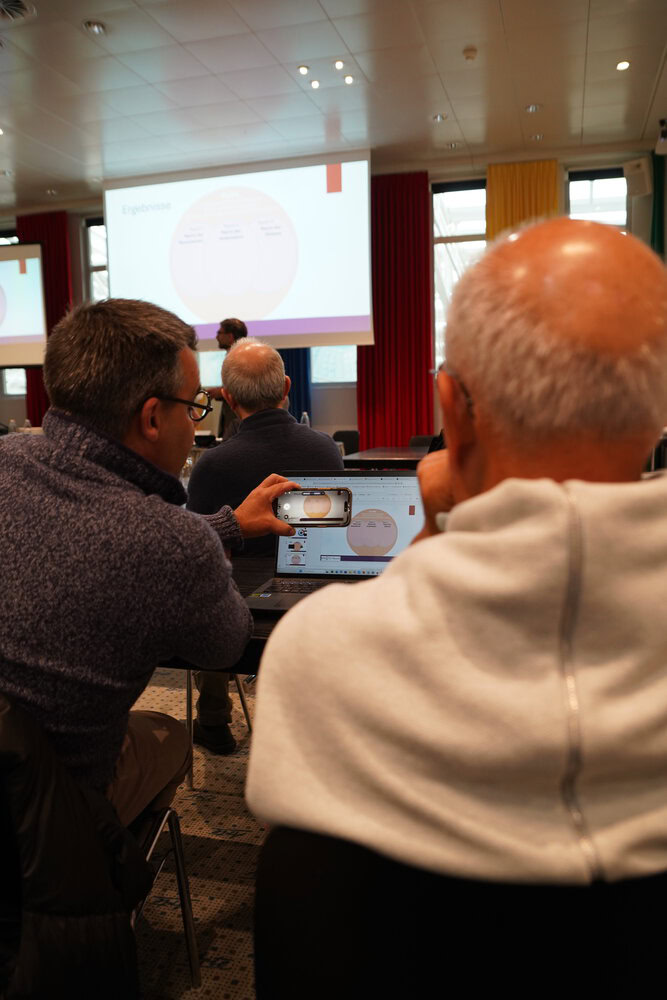
What can music schools and conservatories do to address the shortage of qualified personnel? On June 12, representatives from all cantons gathered in Olten to exchange views. The small-group discussions and thought-provoking ideas yielded some initial ideas.






«The shortage of qualified personnel is a national and international problem,» said Philippe Krüttli, president of ASEM, at the start of this meeting, which was jointly organized by the Swiss Association of Music Schools and the Conference of Swiss Music Academies. «We want to create a forum for discussion so that we can work together to develop strategies for addressing the serious crisis that is looming.»
Rico Gubler, head of the Music Department at the Bern University of the Arts, provided an overview of the activities of the working group established by the two organizations. Their joint efforts focus on three areas:
- Continuing Education for Music School Teachers
- Additional Qualification for Graduates of Music Colleges Who Do Not Hold a Master’s Degree in Education
- Internships and observational placements
In addition, the program directors of the MA Music Pedagogy programs have already agreed on a minimum language proficiency requirement of B2 (for more information, see the ASEM Annual Report).
Studying in Germany and Austria
After a discussion in small groups, Mathias Lang, director of the Vorarlberg Music Schools Association, presented two recent studies. The study «Mikado Music»A 2025 study conducted in Germany highlights a clear shortage of the next generation of music teachers. Due to retirements and a decline in the number of students, there will be a shortage of some 11,000 music teachers as early as ten years from now. Among the measures recommended at all levels are, in particular, improving pay and working conditions, promoting mental health, and encouraging and making more flexible the artistic activities of music students and teachers.
In Austria, the initial situation appears to be significantly better than in Germany, as shown by the preliminary results of a study by the Conference of Austrian Music School Associations which will be published in late 2026. The demand for teachers will remain fairly stable—about 3,000 graduates for some 3,600 teachers. However, it is difficult to draw conclusions due to the complex nature of the data.
A crisis—an opportunity?
Following this, Peter Röbke, a music professor, professor emeritus, and author, outlined new perspectives. Faced with a shortage of teachers in music schools, he pondered what approach to take: should we scale back, make adjustments, or begin thinking about a transformation? «We all want to fight for music schools,» he emphasized, «and we can view crises as opportunities.».
He encouraged the participants to view the music school as «another kind of school»—a flexible school that opens up spaces for learning and musical practice beyond formal instruction.
The Mikado study clearly highlighted the tension that exists between artistic and educational practice: 70% of the study participants agreed with the statement that artistic fulfillment is easier to achieve in other professions.
Peter Röbke cited as an example of an «alternative school» the Dortmund Music!, a music school with seven departments, such as «Live on Stage,» «Digital,» and «House of Pop.».
Finally, he called for the unique situation of Generation Z to be taken into account. For this generation, he emphasized, the very notion of the future has been called into question; never before have we seen such a succession of global crises. He believes that if music schools embrace new ideas, they can become a more attractive workplace for young workers.
«These lively discussions and ideas for the future have inspired me greatly,» noted Valentin Gloor, president of the Conference of Swiss Music Academies, in closing, as he called for continued joint reflection. Philippe Krüttli also thanked those present for their participation in the discussions and bid them farewell ahead of a sunny weekend.