
When can my child start music lessons?
For a long time, a simple rule prevailed: individual instrument lessons do not begin until the third year of elementary school. This assumption is now outdated, as interviews with music teachers and music school administrators show. About new programs and age-appropriate instruments




The vast majority of students at Swiss music schools are of compulsory school age. Children choose an instrument during open houses or information sessions organized in cooperation with their elementary school, and then take individual lessons for several years. Many also play in ensembles: they practice playing together in choirs, orchestras, or bands, and perform on stage together. Their instrument accompanies them throughout their childhood and adolescence and provides them with memorable experiences.
So, when is the best time to start music lessons?
«In reality, there’s no specific age for this, because hearing develops even in the embryo,» explains Philippe Régana, director of the Conservatoire populaire de Genève, where expectant parents can take prenatal singing classes. In addition to programs such as «parent-child singing» and subjects like «music and movement»—known in French as «musical initiation» and «musical awareness»—he has observed a clear shift in when children begin music lessons. «More and more 5- to 6-year-olds want to learn an instrument—which is also made possible for them thanks to specially adapted instruments,» he says. Due to children’s motor and social development, it used to be taken for granted that certain instruments shouldn’t be started until around age eight or nine. Today, many music schools and specially trained music educators already offer preschool-aged children playful instruction on the instrument of their choice.
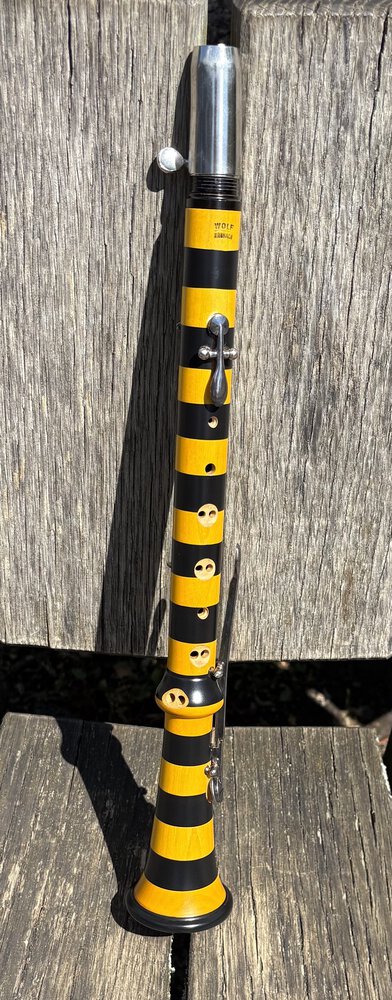
The tiger clarinet (Photo: Daniela Engel)
The Tiger Clarinet as an Instrument for Beginners
This is also confirmed by Daniela Engel, who introduced lessons on the so-called «tiger clarinet» (Tigerklarinette) at the Uster Music School. «The spacing between the holes on the clarinet is still too wide for a five-year-old,» she explains. «But on the Tiger Clarinet, which has a clarinet mouthpiece but only three keys, this isn’t a problem at all. » Lessons take place in small groups, with parents present. «The goal is to reach children early and guide them musically,» says Daniela Engel. «The instruction is designed to be more holistic: it’s about music, not just the instrument.»
The Suzuki Method: Learning to Play the Violin from a Very Young Age
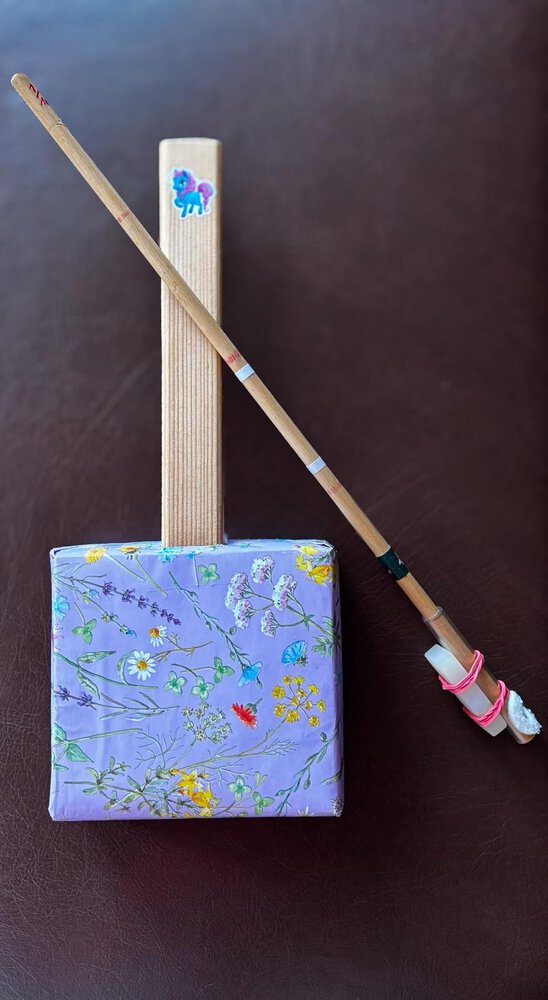
Early violin instruction using the Suzuki method has been around for quite some time. Doris Estermann offers this program at the music schools in Stans and Alpnach. At first, students are given a cardboard violin, which allows them to become familiar with the instrument and practice holding the bow without parents worrying that a valuable instrument might be damaged. The transition to a «real» violin then becomes an even more special moment, a testament to everything the child has already learned.
Group Classes as a Community
The core idea of the Suzuki method is early group playing: children take one individual lesson and one group lesson each week, and can join a beginners« orchestra at a very early age. This concept continues at the Stans Music School throughout the students» schooling, so that the young musicians get to know each other well, friendships develop, and close contact with parents can also be maintained. This is all the more important because the children are young—especially in early music education, where parental involvement is encouraged. “I always say: parents are my assistants,” says Doris Estermann. Without parental support, it doesn’t work. According to her, it’s important to create a positive environment, integrate the instrument into daily life, and celebrate the moments when the child plays.
Getting to Know the Child During the Admission Interview
At some music schools, it is customary to invite prospective students and their parents to an admissions interview, as is the case at the Bern Conservatory. This practice allows the school to get to know the child, understand where they stand, and support them on their musical journey. «Every child is different,» explains Saara Vainio, a member of the school’s administration. «During the admission interview, we determine whether individual lessons are already appropriate at this time, or if perhaps a little more time is needed—and we can refer them to a teacher who will be able to guide them effectively. » What matters isn’t a specific age, but the child’s individual skill level and aspirations.
Pros and Cons
If students start playing their instrument earlier, does that mean they’ll also quit sooner? Opinions differ on this point. Philippe Régana, in Geneva, sees a potential danger: that children might give up the instrument after four or five years to pursue another hobby. Doris Estermann sees it the other way around: «Those who start early are less likely to quit, because the instrument is already part of their daily routine from a very young age and becomes an integral part of their lives.» « Both agree, however, that puberty is a critical phase, during which many student musicians stop taking lessons. Philippe Régana emphasizes how important it is, at this age, to take the pressure off. »Teachers must accept that students won’t do much with their instrument for a few years, while ensuring that the connection and the joy of playing endure.« Saara Vainio also stresses the importance of the relationship during this period. »This is where the teacher plays a key role—the one who says, «I understand your situation; I’ll support you through this,»” explains Saara. “Often, it’s simply stress that prevents them from practicing, not a lack of interest.”
The Joy of Music
Ultimately, Philippe Régana points out, age is secondary anyway: «What matters isn’t making music, but how you make it. A strict teaching approach that isn’t tailored to the child won’t work, whether the child is four, five, six, or seven years old. » Or, as Doris Estermann from Sarnen puts it: «If you love music and can ignite that spark, that alone is enough to make a big difference.»