
Music-Making Among Older Adults
People are living longer, and they want to continue playing music—or even start learning it later in life. Many music schools offer classes or ensembles for seniors. Those interested in this specific approach to music education can pursue continuing education in «music geragogy» at the University of Applied Sciences and Arts Lucerne. An interview with Dominique Regli-Lohri, music professor and program director of the CAS „Musikgeragogik“ program.


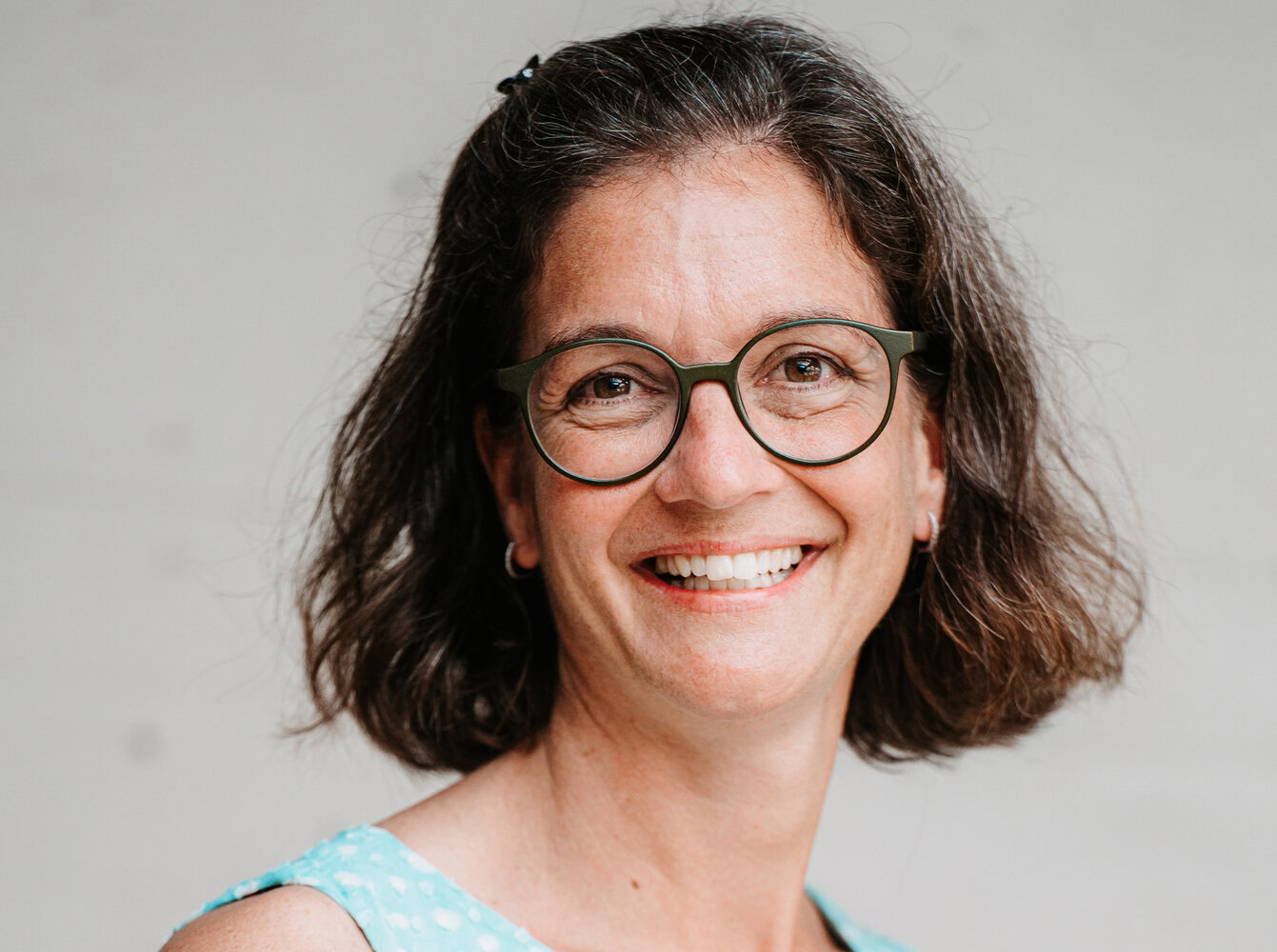
You once said that music can bring back memories for older people. What do you mean by that?
Music can rekindle the joy of playing, a sense of carefree innocence, childhood—the things we carry within us. And it can bring back memories. For example, it might suddenly remind us of a song we used to sing at the family dinner table before a meal, or at preschool during a performance. Many important life events are linked to music. Finally, older adults who make music rediscover a childhood aspiration—perhaps they would have liked to learn an instrument but didn’t have the time or the means. And now they can make up for that.
You teach older adults at the Oberland Ost Music School in the canton of Bern. What kind of program is this?
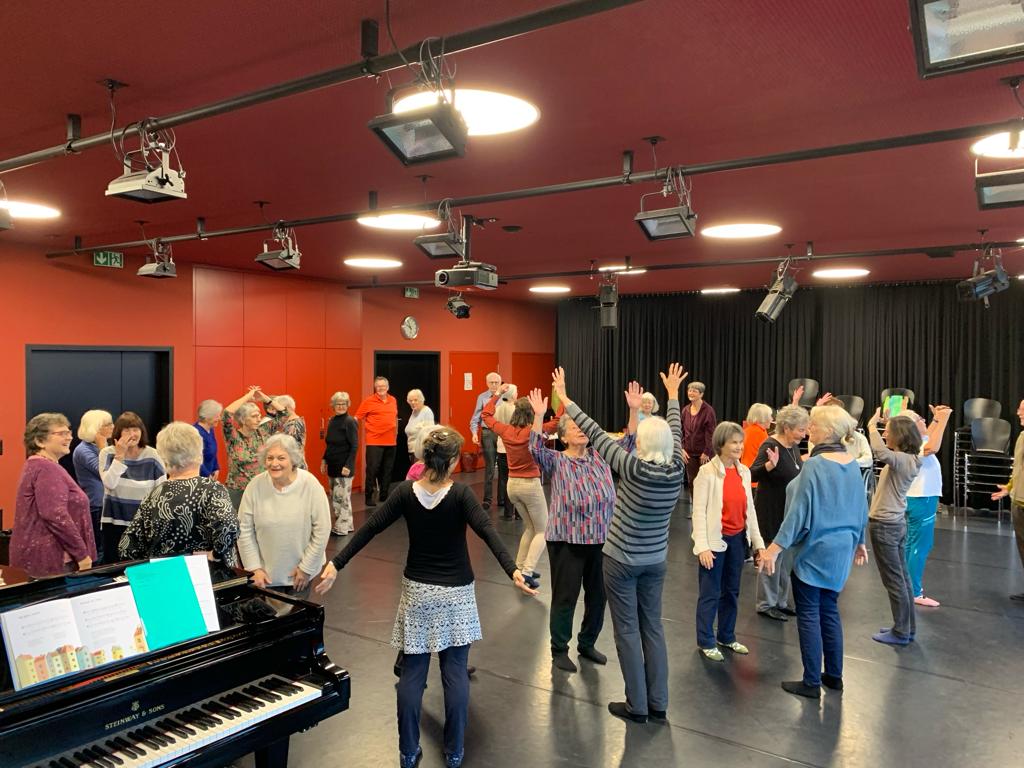
The class is called «Musik und Bewegung für Menschen im besten Alter» (Music and Movement for Seniors). Currently, I teach three groups of about 15 people every Monday morning—all active seniors, the oldest of whom was born in 1932. The program has been so popular that we were able to start an additional group this summer.
What happens during a lesson?
It consists of various elements, including a warm-up, movement improvisations, rhythmic exercises, coordination exercises, and songs combined with movements. The creative element is extremely important; participants don’t just go through the motions—they develop their own ideas. Many adults have lost touch with their own creativity, and it feels good to be able to create things again. In any case, we laugh a lot during these classes. There’s no right or wrong—this group offers a safe space. It’s very enjoyable and playful, but also challenging—some people say they have to lie down for a bit after class (laughs).
How did the idea for this program at the music school come about?
I started out as an elementary school teacher, then studied music and movement, and also earned a degree in piano. Being able to combine these three areas of training has brought me immense fulfillment. About eight years ago, I spontaneously went to see the director of the music school and asked him if he would be interested in a program for seniors. Forty people signed up for the very first class.
Besides the music, isn't the social aspect just as important?
Yes, it’s extremely important. Many people come early on purpose so they can chat, and they bring something for the break on their birthday. Each group has a chat group; members message each other, call each other, or meet up. This is especially valuable for people who would otherwise be lonely in their daily lives—whether because they’ve lost a partner or have physical limitations. Sometimes I also organize intergenerational events, such as yodeling and rhythm classes, or an annual “Christmas and Rhythm” event, during which I sometimes invite kindergarten classes or put on a mini-concert with colleagues. I also sometimes involve the participants in behind-the-scenes theater projects; they supervise children or help out with things like costumes, which brings them so much joy.
Do you also incorporate instruments into your lessons? Or singing?
We use small percussion instruments and all kinds of materials, such as balls, hoops, and wooden objects. We also sing, but without really straining our voices. The goal is coordination, independence, and creativity. I improvise a lot on the piano, or play pieces in different styles.
What kind of music are the participants interested in? Are they mostly classical music fans, or are there also die-hard Rolling Stones fans from the very beginning?.
There’s a little bit of everything. I try to cover as wide a range as possible—we have songs in German, French, English, Italian, and Latin; it’s very diverse. Some people especially like folk music, pop, or even the Beatles or the Rolling Stones. Many are interested in classical music and listen to entire concerts at home. More and more often, they also bring their own songs. For example, one participant recently brought a song she knew from her time in East Berlin during the GDR era—a protest song that people used to sing together outdoors in the gardens. There, too, we saw how music could bring things back to life: the participant shared her memories with us—how things were back then with that song, and how the music unleashed energy. We worked with that song for several weeks; it was truly beautiful.
You are involved not only in practice but also in education, and you direct the «Musikgeragogik» continuing education program at the Lucerne University of Applied Sciences and Arts.
That’s right—a year ago, I took over as director of the program from Andrea Kumpe, who had established this continuing education program. The CAS has already celebrated its tenth anniversary. Rhythmic movement for seniors is truly my passion—it’s so effortless to teach, and you get so much energy in return; it’s something I want to pass on. In the future, this kind of program will become increasingly necessary—and for that, we need professionals who can gain a wealth of knowledge, practical tools, and inspiration from this continuing education program for this specific target group and these diverse fields of activity.
Generally speaking, who are music education programs for seniors intended for?
The target audience is very broad. There are programs for seniors and the elderly, for people with dementia, for those living in care facilities, for palliative care settings, and also for multigenerational projects. In addition, institutions such as the Church are also showing increasing interest in these programs.
What kinds of services are available in the field of palliative care?
There are musicians who play at the bedside of hospitalized patients or in their homes. Depending on the situation, participatory approaches are also possible; we can place something in their fingers to feel, to mold, or that produces sounds—tactile perception remains intact until the very end. The key is to clearly understand what the person needs and to avoid overwhelming them. We need to create beautiful moments that entertain or bring back memories.
Are projects that bring together multiple generations particularly challenging?
Not necessarily. Music knows no boundaries. Intergenerational singing is so beautiful! When I bring together several age groups, I do the same thing with each group; everyone is involved equally—only the distribution of roles changes. My goal is for everyone to feel comfortable. Of course, there may be differences between what a six-year-old child and a 90-year-old senior can achieve, but the goal is for everyone to be involved, encouraged, and to have fun.
The CAS is open to interested individuals in the fields of healthcare, music, social education, and special education. How do you bring these different target groups together?
Peer learning is very important—and very effective. Skills and experiences vary widely. I try to teach in a differentiated way tailored to each student’s level, and I often deliberately mix up the groups so they can benefit from each other’s practical knowledge. Music, in particular, can sometimes create barriers—for example, when one person comes from the social sector and another is a professional musician. In such cases, it’s important to proceed with great tact and provide reinforcement: Their musical abilities may be even less pronounced, but on the other hand, they have twenty years of experience working with people with dementia.
What career opportunities does the CAS offer?
This field is still relatively new, but it already offers many opportunities, such as in music schools, social institutions, or nursing homes. Participants in the «Musikgeragogik» CAS program develop or strengthen their own professional profile. The practical project at the end of the CAS, in particular, can often open doors to future employment.
Visit CAS in «Music Geragogy» is presented as a model of interdisciplinary cooperation between the departments of social work and music at the Lucerne University of Applied Sciences and Arts.