
The National Sound Archives, between past and future
Founded in Lugano in 1987, the Swiss National Sound Archives, now part of the Swiss National Library, collects, preserves and makes accessible to the public the "Swiss sound heritage". This includes all public and private recordings considered to have documentary and identity value for the Confederation: musical memory, but also voices, interviews, advertisements and soundscapes.




It's a familiar gesture, one we've made since childhood and to which we remain more or less attached over the years, depending on our degree of romanticism. Don't you sometimes put a seashell to your ear, one of those you have on the shelf, sticking out over the row of books? "Listen to the sea", we were told when we were little, because we know: shells have the magical ability to absorb the sound of their habitat and preserve it forever. As we grow older, we learn, if we wish, that they merely serve as a resonance chamber - small and imperfect - for external sounds, like the sound of our own blood circulation in our ears. Yet the desire to believe in this little sea remains. Perhaps because it responds to the great mania of our species, that of seizing what exists, and what is its most impalpable and ephemeral reality: the world of sound.
The audible, by the very nature of its wave, gradually disperses and fades. Musicians and actors are all too familiar with the ghost of perfection, the chimera of identical repetition of a sequence of notes or words. To compensate for this loss of control over reality, humans invent the stratagem of writing. Verba volant, scripta manent An ingenious remedy for the dispersal of energy in the world of sound. Writing is a code which, rather than attempting conservation, aims for the repeatability of the message and the signifier, relying on the imaginative capacity of the human brain.
But what about the real sound, the real object? The castrati of Baroque Rome studied in front of echo walls to obtain a fleeting reflection of their voices, and it wasn't until 1857 that Édouard Léon Scott de Martinville patented the phonoautograph, a kind of oscillometer with which he managed to transcribe the vibrations of sound onto blackened glass. Transcribing, but not yet reproducing: we had to wait until 2008 to be able to listen to his phonoautograms - a fragment of Au Clair de la Lunesome verses from Tasso and other small experiments. But in 1878, Edison patented his phonograph, which transmits the vibrations picked up by a membrane to a stylus that records on a cylinder covered with tin foil, and also allows the groove to be "played back" in reverse, so that the recorded sounds can be listened to again. In 1888, Berliner switched from cylinder recording to disc recording, which was easier to reproduce in series for the commercialization of music. The 20the This was followed by electric recordings on magnetic tape, then purely digital recordings, the reign of the compact disc and finally the disappearance of the physical medium: music dematerialized on the network. Today, we can record and reproduce hours of sound from our smartphones, and access almost all the world's music online.
A library for sounds
Libraries exist to preserve written documents and make them available to the public. What about sounds? Once we've managed to fix these sounds on a support, what about the supports and the sound memory of a civilization?
From the end of the 19the In the 19th century, just a few years after Edison's invention, people began to record assiduously. Some European institutions soon realized the importance of preserving this heritage, just as they would do with the written word: in 1899, the Vienna Phonogrammarchiv was born, and in 1900, the Berlin Phonogrammarchiv. In Switzerland, the National Library had been collecting sound documents among its paper holdings since the beginning of the last century, but in the 1960s, the need was felt to create a specific institution dedicated to the world of sound. In 1984, the Municipality of Lugano provided premises and funds, and in 1987 the Swiss National Sound Archives Foundation was founded. Since 2016, it has been a public institution, integrated into the National Library. After its beginnings in the Studio Foce, the SNSF moved to the Centro San Carlo in 2000, and is currently waiting to move, in 2031, to the Città della Musica, a futuristic project that brings it together in a single hub with other partners in the music field, in the RSI premises in Besso.
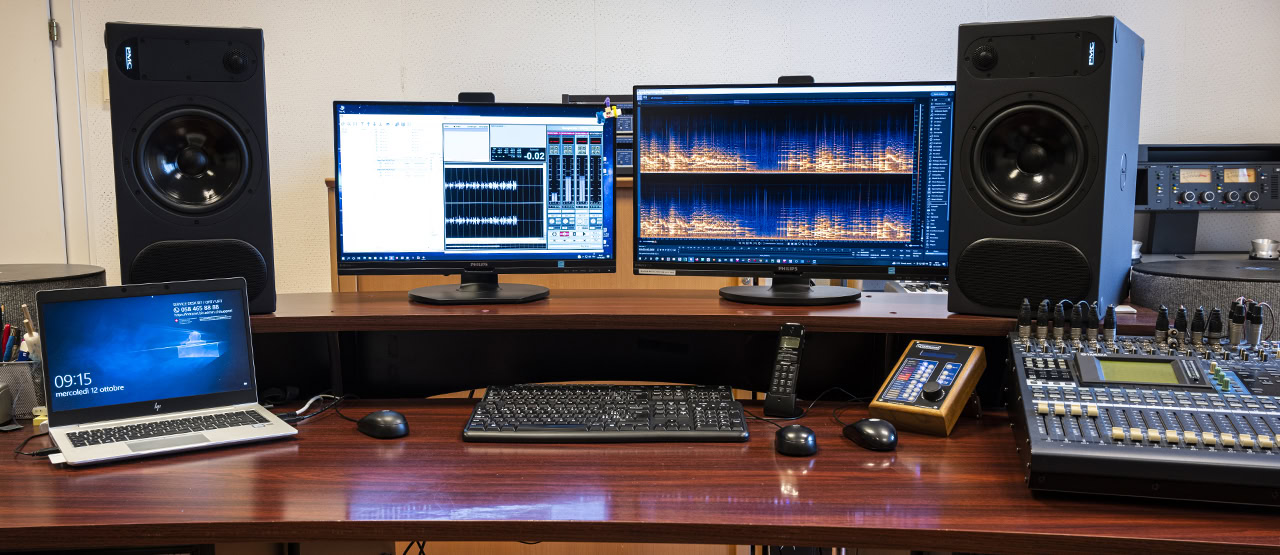
The Phonotheque's mission derives from the Federal Law on the Swiss National Library, since it is a section of it: to collect, inventory, conserve, make accessible and publicize Switzerland's sound heritage. The latter is defined and made up of a series of documents called Helvetica, which have a link with the country and are acquired, documented and catalogued in five fields, four of which are musical - classical, jazz, rock&pop, folk - and a fifth which encompasses everything that is not music: words and voices, audio books, plays, interviews, but also sounds of nature and soundscapes.
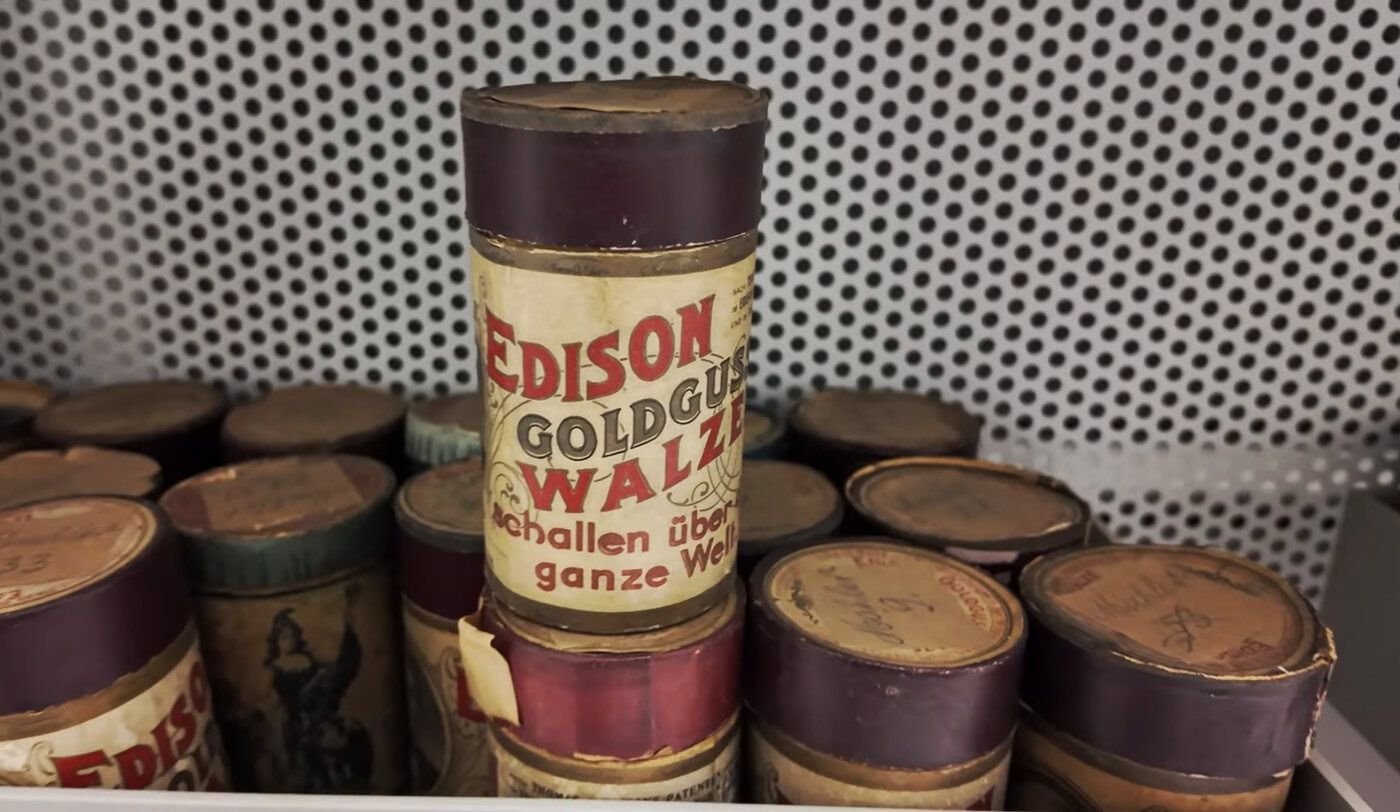
"Our oldest documents are wax cylinders - classical music and operettas - from the collection of a resident of Chiasso," explains Günther Giovannoni, director of the Phonotheque since 2019. "As far as music is concerned, there is no obligation in Switzerland, as in other countries, to deposit a copy with the Phonotheque. That's why, over the past 40 years, thanks to the support of Suisa, the music rights management companies and collaborations with radio and other partners, we've had to make up for the delay accumulated over all those years. As far as streaming is concerned, the Federal Parliament has approved a law on digital legal deposit from 2027. We're talking about a gigantic quantity of material, which implies the need to make choices: we're not obliged to keep everything, but only what is considered important. It's a delicate job that falls to the people in charge of the various sectors.
A country's sound heritage
One might ask what's important to keep in the often highly commercial hubbub that assails us as we quickly scan social networks. "It's not up to us to judge," interrupts Giovannoni. "Commercial or artistic value is not our only selection criterion: we have, for example, a section devoted to advertising which, depending on certain parameters, may be less rich or less formative, but which is very important from a historical and sociological point of view, and even more so for professionals in the sector. The real question is one of sustainability: does it make sense to keep so much material? What are the environmental and financial costs? Our guidelines allow us not to take everything, so as not to encumber ourselves. We also sort out, for example, new artistic productions, which we let settle for a while before adding them to our holdings."
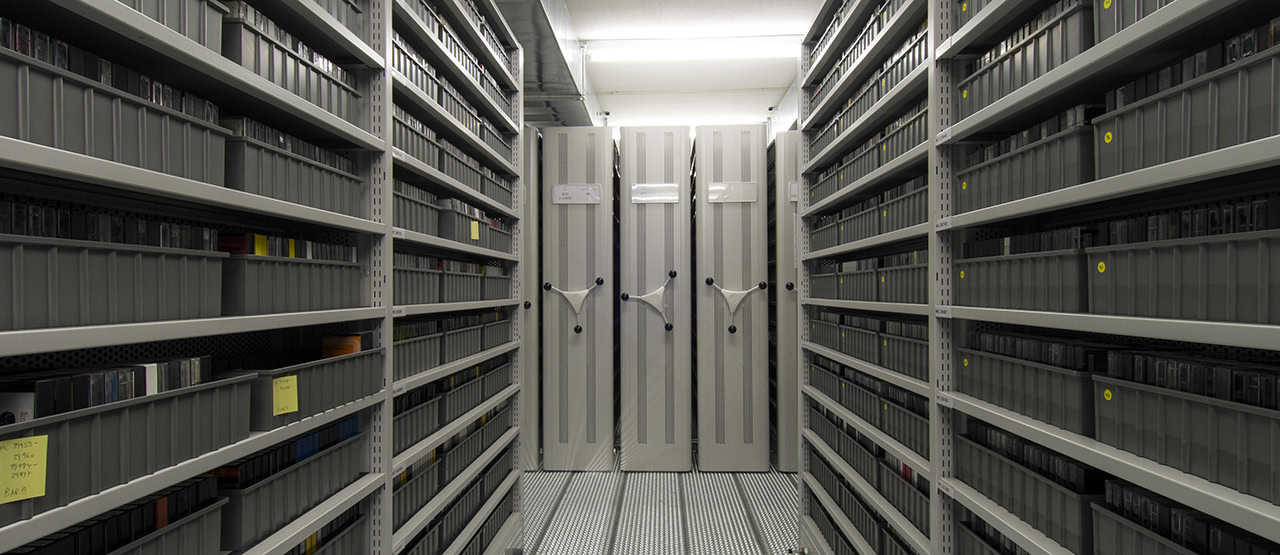
This implies a clear vision of the concept of a country's sound heritage. "It's partly our sound memory that constitutes us," explains Giovannoni. "Switzerland is small, but very diverse in terms of languages, cultures and facets. The archivist's job is to preserve the memory, because that's what characterizes us. We have a mission of protection that looks to the future: to preserve this audio heritage as best we can for future generations."
In this respect, the field of speech and sound, which is perhaps the richest in the Phonothèque, is very interesting. While there was an explicit intention to document the bells of many of the Confederation's churches, the soundscapes are sometimes the secondary result of other recordings, made in public places, which allow us to retrace the history of a certain space - a village market, a town square - several decades later. "Sounds change, like our daily lives," explains Giovannoni: "Take the cracking of a glacier, which changes over the years and soon no longer exists. More prosaically, the municipality of Lugano has deposited all city council recordings from the last 60 years: we can follow the evolution of political discourse from a linguistic, sociological or other angle..."
Among the musical documents, some guide us through the country's history, such as the Hanny Christen collection: "Fifty magnetic tapes discovered by chance in the early 90s saved some of Switzerland's 'old and pure' traditional music and revolutionized our vision," explains Andrea Sassen, head of the folk section. "Or think of Kiko Berta's K-Sound collection, which recorded some of the most important albums of the '90s and contains gems never before marketed," adds Yari Copt, head of the rock section. "But it's also interesting to look to the present," he continues: "today there's a generation of Swiss artists working with a clear vision and high production quality. From the point of view of those who work with musical memory, this is a very strong signal. The role of the Phonothèque is fundamental not only as an archive of the past, but also as a living place that documents the present and builds the sound heritage of tomorrow. Preserving these productions today means that we can tell the precise story of what was happening in Swiss music at that historic moment.
Looking to the future
Preserving, but also, from time to time, creating, as if to cast his eye towards what deserves to be immortalized for the future: on the Phonothèque YouTube channel, Bruno Spoerri celebrates his 90th birthday by delighting the public with a marvelous live streaming performance, masterfully recorded at Studio Lemura by Lara Persia's microphones. "This is the first in a series of concerts we've commissioned thanks to an exceptional donation," explains Giovannoni. "A showcase of sorts: we're adding value to our archives by creating content with those who have helped build Switzerland's sound heritage. A tribute to those who have given so much."
Here too, the concept of heritage, of a forward-looking vision, returns. And this brings us back to the technical challenge of supports, a central theme in the conservation role played by the Phonothèque.
"We're closely linked to technology," says Giovannoni. "Some, like shellac or vinyl records, are resistant and, a century from now, we'll still be listening to them if they're professionally preserved. Others don't: magnetic tapes slowly lose information, and the CDRs we used to be able to burn at home have an average lifespan of around five years. The same applies to reproduction equipment, which has its own obsolescence and historical trajectory. Sony's DAT cassettes, produced for 20 years until 2007, when the parent company ceased production without relinquishing authorization, are a case in point. Today, we still have a stock of playback heads, but it will eventually run out, and then we'll be faced with a serious problem. All this means that we need to prioritize digitization and conservation. And an ongoing technological challenge to preserve and make this material accessible: we want to be a place where stimuli and opportunities are created for users and the public to discover new things.
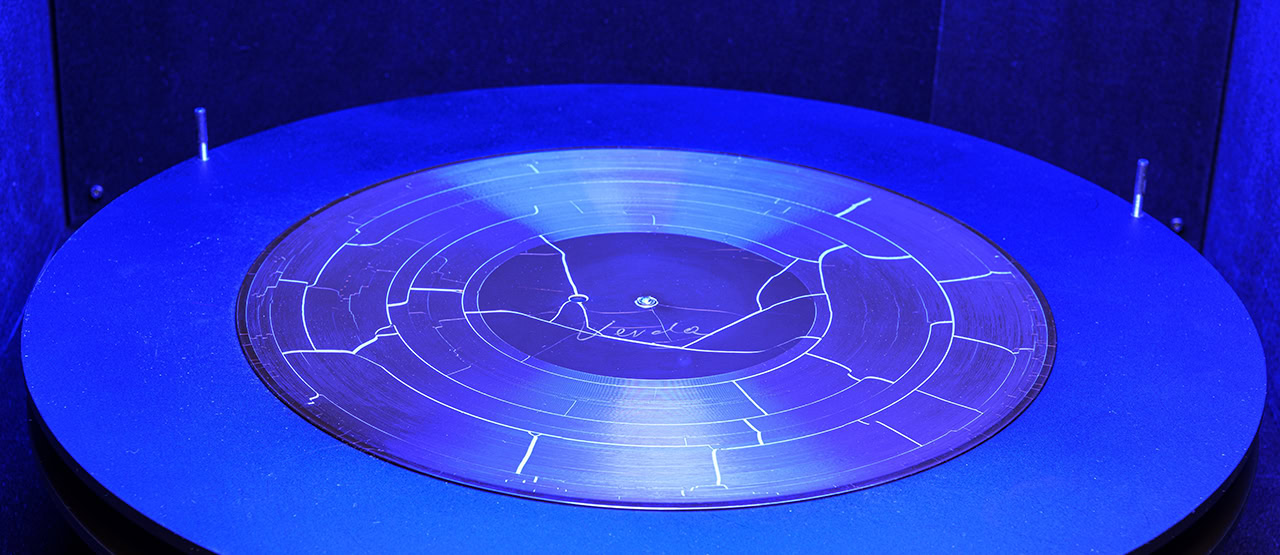
This commitment is reflected in futuristic technological projects, such as research aimed at continuing to read DATs, for example, or flagship programs like Visual Audio, a digitization system that saves the audio content of a broken record by means of an analog photograph and an image scan. But also to educational initiatives aimed at all publics, which take the form of guided tours, workshops, conferences and activities in schools. In this respect, the Phonothèque's efforts to raise awareness of listening and sound among the very young are extremely important.
"Young people listen to music, but often the source is their cell phone, with dramatically low quality," laments Giovannoni. "We need to educate them to listen consciously, which is also fundamental in terms of the potential damage associated with exposure. We need to draw their attention to the fact that the sound quality of music is an important factor in listening, and that the time, medium and format with which it is consumed can alter our perception. Young people sometimes don't even know that there are other ways of listening to music other than their cell phones, and don't realize the differences in quality. All we need to do is educate them, which is possible, by showing them the technical advances and differences in sound quality that we have encountered throughout the history of media."