
When the classic takes off
Bubbling with a cultural ecosystem, the M Classics series is bolder than ever with a 180° turn.




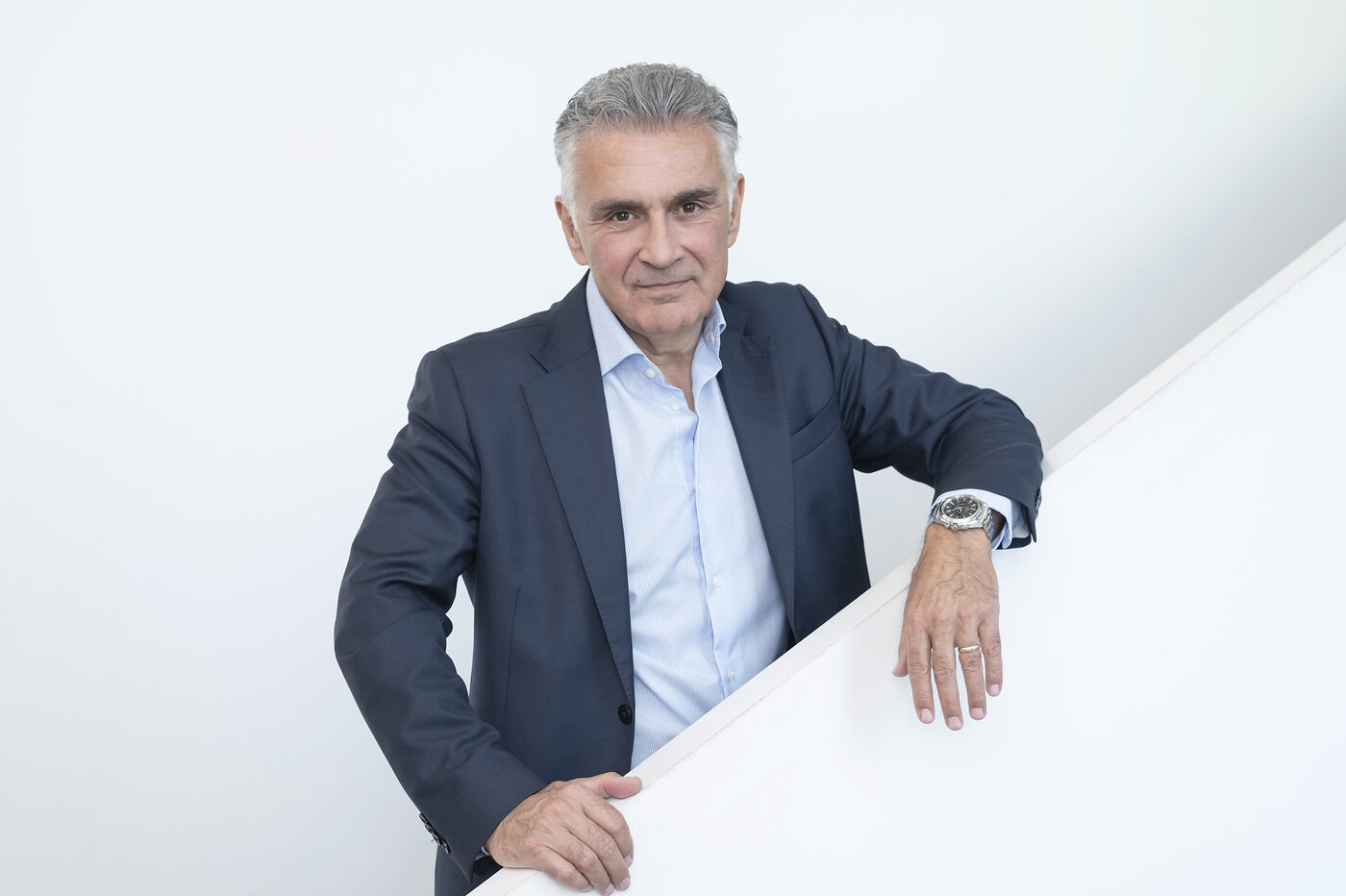
Photo: Priska Ketterer
Artistic director Mischa Damev reaffirms his ambition and conviction, through astonishing and demanding aesthetic choices. Interview.
Mischa Damev, since last season, your Migros Pour-cent-culturel Classics concert series has focused on the «Classics 180°» concept. Is this a reference to your ambition to change the way classical music is perceived and experienced?
In fact, it's a concept that's both new and old, based on the idea of breaking certain traditional codes in classical music that, in my opinion, make it neither more interesting nor more popular. These are codes or formats that have been set in stone for a hundred years or so. So we wanted to inject a little more creativity into the whole thing. This could mean, for example, introducing images, dance, different expressions, or an atypical interpretation. The important thing is to make the «surprise» aspect an integral part of the concerts. In my opinion, this has been somewhat lost: when we listen to music, we're no longer surprised, we know what's coming... Some people go to concerts to find what they like, and they find it every time. Somewhere along the line, we've lost the freshness of classical music, which from time to time becomes a bit like a beautiful museum piece that we keep in a vacuum. What I really want is for music to stay alive!
What was your artistic guideline for the 2025-2026 edition?
As in the previous season, the guiding principle is to present concerts, or rather shows, that are likely to surprise all audiences. This means taking risks. Sometimes, when you give the green light to projects you're not 100% familiar with, there's always a risk that the result will be something other than what you hoped for. But in principle, we are surprised for the better. Our ambition is to make music accessible and sensitive, to broaden the concert experience beyond the realms of perception.
Where does this commitment to classical music come from, this desire to offer audiences new experiences?
That's my whole life! Classical music has dominated since my childhood, with the first lessons I received from my grandfather, who was a conductor... I was a musician myself, a pianist and then a conductor for a long time. I've worked as an organizer of various classical concerts for many years, very often with escapades into pop, rock and other genres, through unforgettable collaborations with great artists like John Lord (of Deep Purple), among others... The idea of safeguarding creativity through great music has always interested me. What I mean by that is not to safeguard heritage, but to build on it and bring it to life. This has always been an obsession of mine, first as a musician and then as an organizer. Since the Covid crisis, we've seen a decline in audiences just about everywhere in the Western world. Some say twenty percent, others thirty percent. Several factors may explain this trend. The health crisis has undoubtedly had a huge impact, creating a gap in the field of culture from which we are still suffering a great deal today. It should also be pointed out that the average age of classical concert-goers was already very often over 70. This means that these spectators, who are now around 80 or more, may no longer have the desire or the physical capacity to attend a concert. And then there's the next generation who don't keep up and who need to be targeted, encouraged and invited to take part in this creativity, by trying to show them that many of these clichés, whether false or true, don't have to prevent them from coming to the concert. We don't have the key to success, but we are in a way a laboratory of ideas.
How do we generate enthusiasm among young people?
Young people are our future, and we need to be able to attract them. I think that if we lose the bridge between classical music and youth, then it can become irretrievable. There's a view that audiences for classical concerts have always been older. I don't share this view, because I come from a former communist country, Bulgaria, where this has never been the case. I've conducted in China, Russia and other non-European countries, where very often half the audience was made up of young people. The fact that audiences «age» with the music is a phenomenon that is more common in our Western countries. And I think it's above all a question of perception. The image of classical music has suffered over the last fifty years, because it was linked to labels - it's too expensive, it's elitist, it's for old people, there are too many codes, you can't find what you're looking for, it's too long, it's boring, it's old-fashioned, and so on. These labels are «dangerous», so to speak, because they feed into the image. So it's a question of breaking the codes and the image, and at the same time developing proposals aimed at young audiences. In my regular contacts with young people in universities and schools, I observe that this image exists, even if it doesn't always correspond to the truth. But when we invite young people to come and see a concert that obviously avoids feeding into these codes, then they are likely to change their minds, to open up, to better understand the vast universe of classical music.
Against this backdrop, how did you come up with this season's program of highlights?
My long experience in the business has enabled me to acquire know-how and a fairly broad idea of what's going on musically, at least in the Western classical world. I am guided in my choices by my love for artists, but also for creation that cultivates a certain form of audacity. So I favor a mix of creativity, surprises and, above all, artistic quality. It's very important for me to keep this balance.
This season, you have included a new Swiss creation with the Swedish Chamber Orchestra, conducted by clarinettist Martin Fröst, which tackles the 7th Symphony.e Beethoven's Symphony in an unexpected way. What is the artistic ambition behind this kind of experiment?
Martin Fröst is an extraordinary performer, probably one of the most skilful clarinettists in the world. Beethoven Mirrors is a project he conceived with the help of arranger Hans Hek. It's a kind of sonic odyssey, through which he demonstrates just how interconnected music can be. You come away with the revelation that even pop, rock, hip-hop and electronic music, such as Daft Punk, have their roots in classical music. It's also a way of popularizing classical music.
The program includes for the first time the Iceland Symphony Orchestra, led by cellist Kian Soltani, composer Anna Thorvaldsdóttir and conductor Eva Ollikainen...
Today, when talking about orchestras to more or less experienced connoisseurs, the Iceland Orchestra is rarely mentioned. At the same time, Iceland is an extraordinarily interesting and surprising country in many respects. Listening to this orchestra on two or three occasions, I was surprised by the quality of their music, and so I was keen to show our audience something other than the most renowned international ensembles, such as the London Symphony Orchestra, the Orchestre de Paris, or the New York Philharmonic... Together, we drew up the concert program, which includes works by Elgar, Sibelius and Thorvaldsdóttir. Kian Soltani is also an exceptional young performer whom I've known for a long time and for whom I have great admiration. He also shares my desire to popularize music as much as possible.
Throughout his long career, Teodor Currentzis has earned a solid reputation for his approach to repertoires - from early music to the 21st century - and for the way in which he has interpreted them.e century. What can we expect from the concert he will give at the head of his new orchestra Utopia?
For me, once again, the most important thing is to surprise the audience, deflecting expectations, offering something different that makes us think and makes the evening memorable. As far as Teodor Currentzis is concerned, it's his interpretation that, in my opinion, makes him one of today's most captivating conductors. Whether you're for or against his artistic approach, you have to admit that he interprets the works in a completely personal and original way, without the use of special effects. In this concert, two masterpieces by Berg and Mahler are brought together under his direction.
What artistic and human values motivate you to present certain musicians more than others?
Firstly, excellence and musical quality, which for me is an indisputable aspect. And anyway, at some point, everyone has their favorites. I also like artists who have an entrepreneurial spirit, who dare to experiment, who, even if they sometimes fail a little, are nevertheless interesting, because these musicians themselves have a very high artistic level. Of course, I have to have artistic confidence and sense that the artist is willing to push the boundaries of the classical tradition. Gautier Capuçon and Kian Soltani are among those I regularly invite. I think that today, a young musician, classical or otherwise, whether at the start of his or her career or well positioned in the competitive international market, should always be challenging himself or herself, proposing new ideas and reinventing himself or herself!
You've been at the helm of M Classics for over 18 years. How would you sum up that time?
These eighteen years have been fascinating for me, from a purely selfish point of view. We've had many experiences, and very often come up with new formulas, some of which have been more successful than others. One of them was aimed at showcasing Swiss talent, particularly composers. There was the so-called «Overture» - lasting 10 to 15 minutes, during which the orchestras performed a piece with a young artist. But times have changed. During my first fifteen years at the helm of the series, the concerts were always sold out, because we invited the great orchestras, legendary soloists and renowned conductors... We set attendance records. Today, what is indisputable - and surveys show it - is that a majority of the public no longer knows the big names, like Anne-Sophie Mutter, or Leonidas Kavakos. This phenomenon has been particularly noticeable since the break caused by the Covid crisis. Sometimes, people of all ages come to our concerts without knowing the program. This is both good and bad news. The bad news is that it's become very difficult for the organization to get headliners to fill the venues. The good news is that, in this context, incredible avenues are opening up to young people, to those who never used to go to concert halls and who are now venturing in without necessarily having any prior knowledge of the works or artists. The chances of obtaining tickets on the evening of the concert are also higher. On the other hand, there is now also an oversupply of concerts and festivals, particularly in Switzerland, which has 30 % more festivals than before the health crisis. So I think it's mainly the «attractiveness» aspect that needs to change.
One series, four cities: how do you approach this plurality?
We are fortunate to be present in several cities, which enables us to reach very broad and diverse audiences, but which obviously also represents a challenge for us. Geneva, Zurich, Lucerne, Berne, as well as Sion and La Chaux-de-Fonds, are contrasting cities, each connected in its own way to the world of art and music, with its own specific sensitivities. When we tour, we present the same «product» in each of these cities, so audience reactions are often very different. But our audiences remain loyal, and this loyalty is due not only to the series' roots in these territories, but also to our affordable and attractive ticket prices. Tickets for 5 francs, in any category, are available half an hour before the concerts and for all young people, whether students or apprentices. And it works! It has to be said that the Geneva audience is perhaps the most loyal of all. It's also the one with the highest number of season tickets - almost two-thirds of the venue's members have been season ticket holders for many, many years! This explains the fact that this is a much older audience than that of Lucerne, Berne or Zurich. In Geneva, we're not the only ones to offer subscriptions - there's the OSR, the OCG, the Grands Interprètes, and many other concert series. It really is a Geneva tradition. This is not the case in other Swiss cities, where subscriptions don't have the same appeal and where this tradition is gradually being lost, as people decide to come to the concert at the last minute. Over time, we've fashioned a rather atypical artistic adventure, building a stage dedicated to the public and the artists. And we've managed to establish ourselves in the Swiss cultural landscape, thanks to our image as an innovator and organizer who dares to open the doors to daring formats and new listening experiences. Our series continues to pursue this ambition, and we look forward to celebrating 80 years of existence and activity in style.